
INTRODUCTION
What is Literature?
Literature is any collection of written work, but it is also used more narrowly for writings specifically considered to be an art form, especially prose fiction, drama, and poetry. In recent centuries, the definition has expanded to include oral literature, much of which has been transcribed. Literature is a method of recording, preserving, and transmitting knowledge and entertainment, and can also have a social, psychological, spiritual, or political role
Etymologically, the term derives from Latin literatura/litteratura “learning, a writing, grammar,” originally “writing formed with letters,” from litera/littera “letter”.In spite of this, the term has also been applied to spoken or sung texts. Literature is often referred to synecdochically as “writing,” and poetically as “the craft of writing” or simply “the craft.” Syd Field described his discipline, screenwriting, as “a craft that occasionally rises to the level of art.”
Literature, as an art form, can also include works in various non-fiction genres, such as biography, diaries, memoir, letters, and essays. Within its broad definition, literature includes non-fictional books, articles or other printed information on a particular subject.
Literature Genres
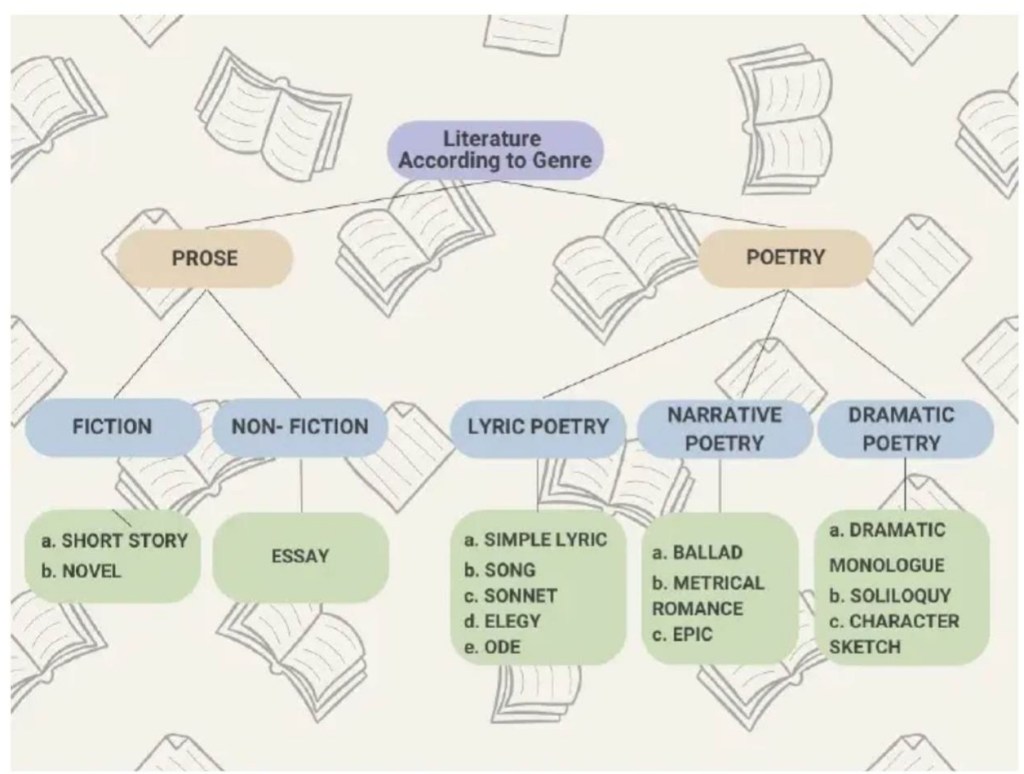
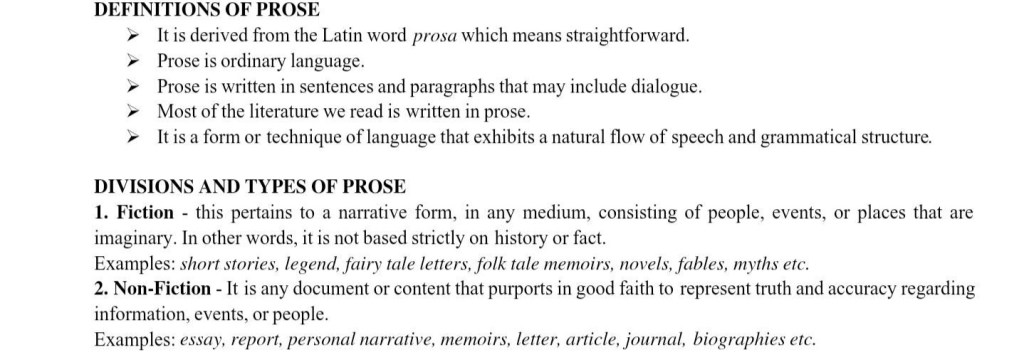
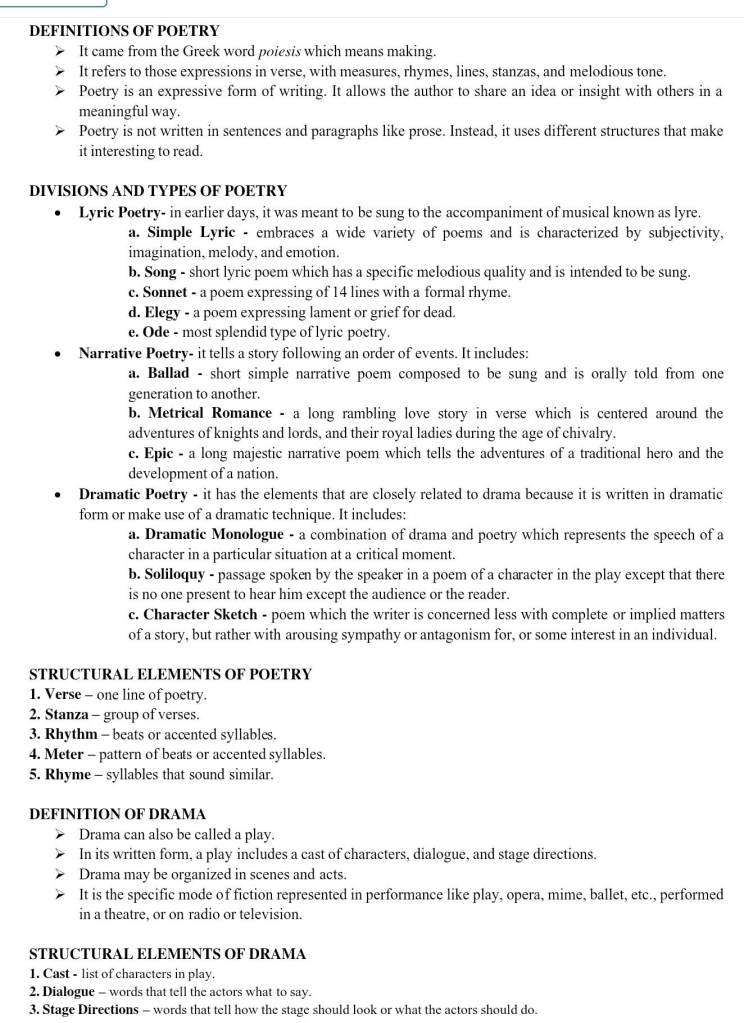
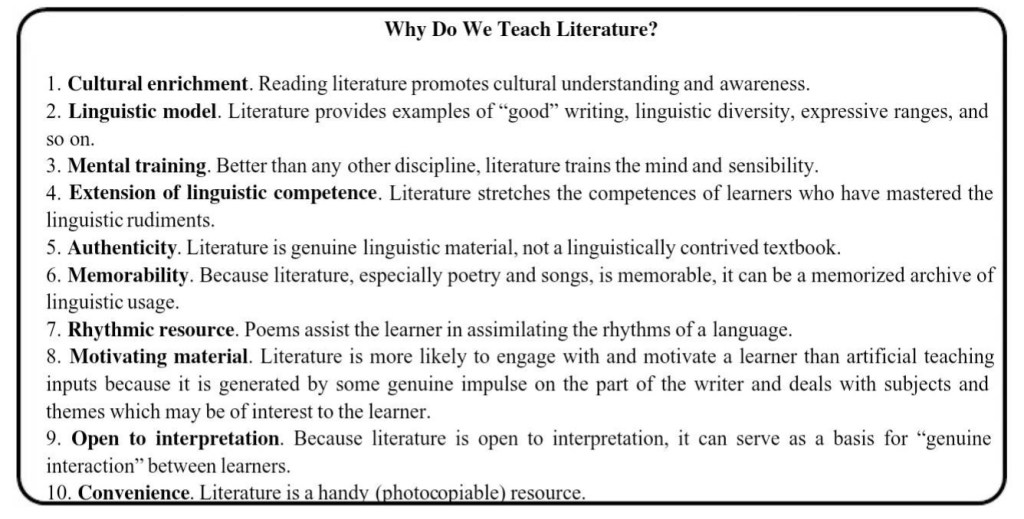
There are a plenty of reasons why literature is being taught;
-It encourages students to communicate with others, by sharing their thoughts and feelings about the story.
-Students engage with the attitudes and opinions expressed by the author or the characters. This helps students to develop their sense of self, their moral code, and their understanding of the world.
-Exposure to non-standard forms of English (as is often found in novels) can help students to recognize norms and patterns.
-Books written by popular authors will likely be more interesting and engaging than texts in language course books, no matter how much effort is put into writing them.
-Literature is motivating, as finishing a book is a real achievement for language learners.
Most importantly, by fostering a love of reading from a young age, students become independent learners who, whenever they pick up a book to read for pleasure, are actually improving their language skills more than any homework task could.
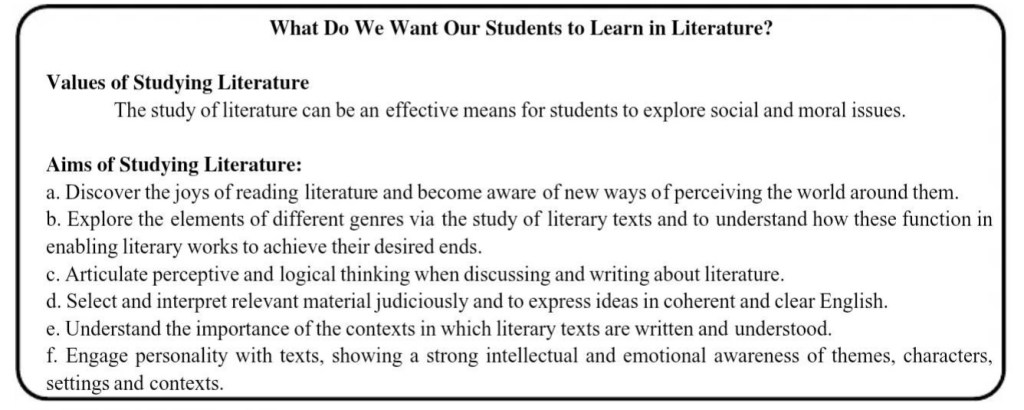
For me, studying English Literature opens us to the world of creative imagination. Not only does it develop skills that are essential for today’s global environment, but it also inspires change and innovation. English Literature studies help us understand our world in all its social, political, economic and cultural aspects through stories, novels, poems, and plays.
12 Reasons to Study English Literature as an Undergraduate
1. Literature can help us make better sense of our world, our lives and ourselves.
2. Literature has the power to give us an enriched understanding of other worlds, lives and times, of the way things have been and how they might be.
3. Reading, thinking, writing and talking about literature is both a personal and collegiate experience – a model of how society operates or should operate.
4. Literature embodies the values of imagination, identification and empathy. These matter in an increasingly divisive world.
5. Characters in literature are very often transformed by the plot and this process models the way literature intervenes in our own lives and can transform them.
6. The shared experience of studying literature in class gives us the ability and the need to read the world and its texts on our own.
7. Studying literature recognises that the making of meaning is a dynamic and volatile process and that meanings are socially and culturally produced, as various and multiple as readers.
8. Studying literature explores the text in its many contexts, how the text finds and makes a place in the world, how it is enabled to speak and to make a difference.
9. Studying literature and critical reading are an opening out that returns us to the text in an adventure that never finishes.
10. The study and criticism of literature is the asking of questions that generate more and better questions.
11. The study and criticism of literature is not just a social act but an inherently political act. Authoritarian governments are for that reason suspicious and antagonistic towards advanced literary study.
12. Studying literary texts with my own teachers, and later with my own students, has very often changed my life. Take every opportunity to have your lives changed by the reading and studying of literature. Because it matters.
https://www.routledge.com/blog/article/12-reasons-to-study-english-literature-as-an-undergraduate#
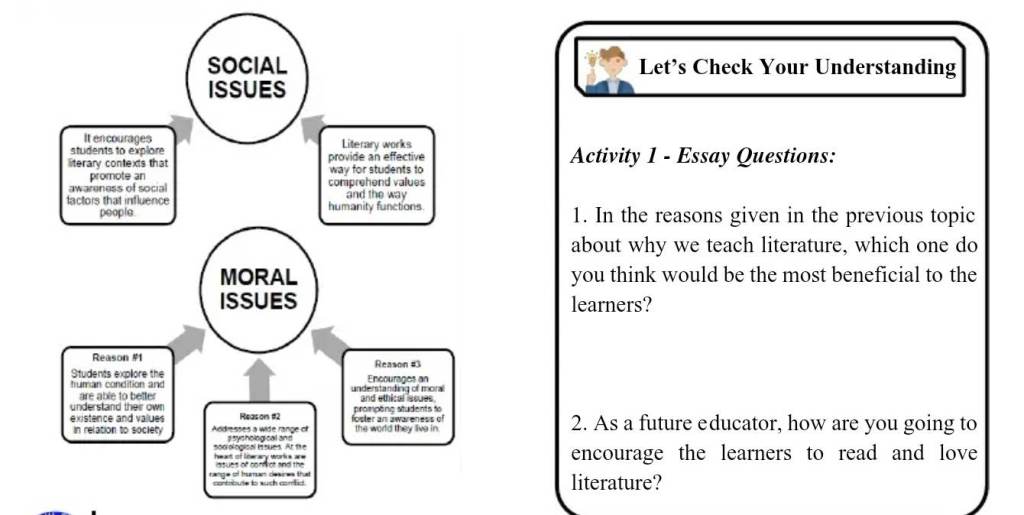
1. In the previous top, i think the most benefecial to the learners why we teach literature is “Motivating material” because literature can motivate learners it generates a genuine impulse on the part of writer and deals with the subjects themes that might be in the learners interest.
2. There are many ways on how to encourage learners in reading literature. For me,you must find out what they’re interested in and then find books that match those interests. This is a good way to ease students into reading. But students aren’t always going to be able to read books that interest them right off the bat. A student who loves horses can’t only read books about horses. Another motivating factor might be to set the scene of a book. If your students are going to read about a character at the turn of the century, show them a video about life during that time. Ask questions that activate their prior knowledge on a subject. Find out what they would do if put into a similar situation. Doing this not only makes the reading relevant, but it also gets them excited to find out what’s going to happen in a book.
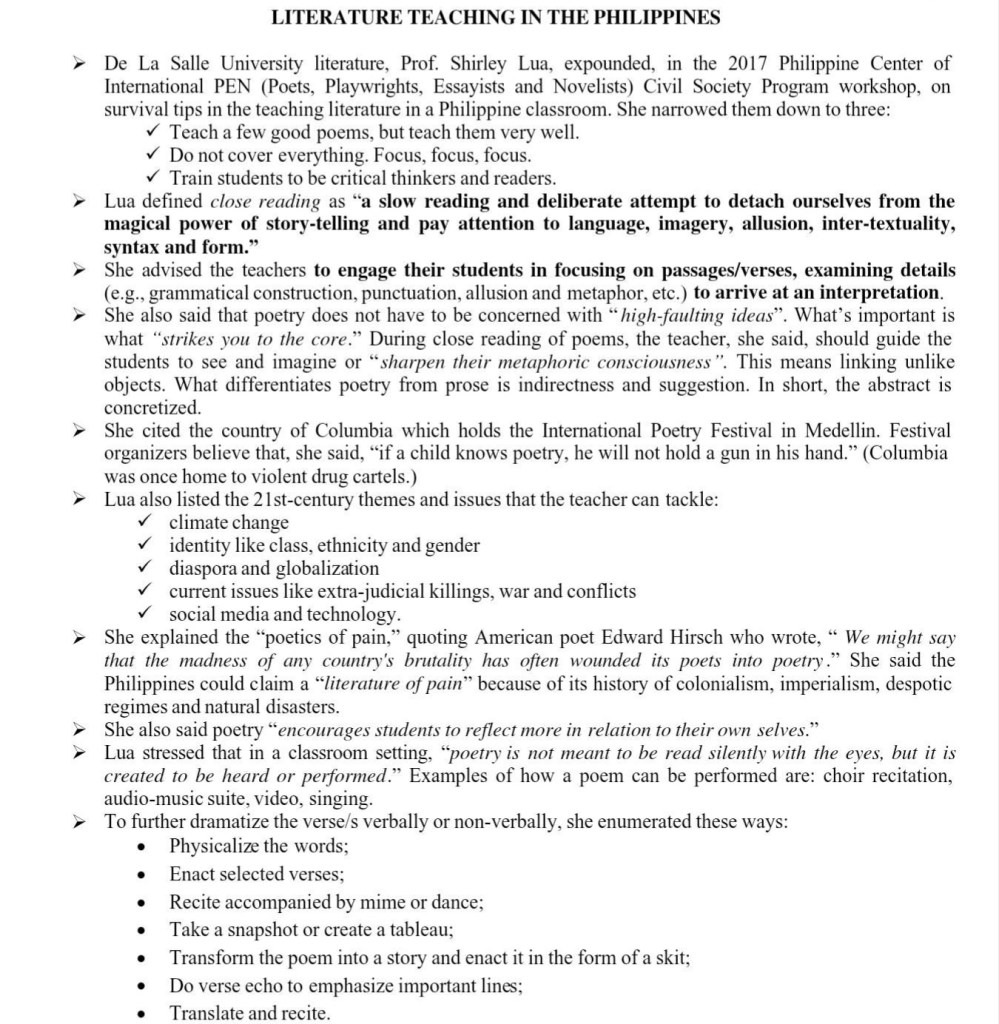
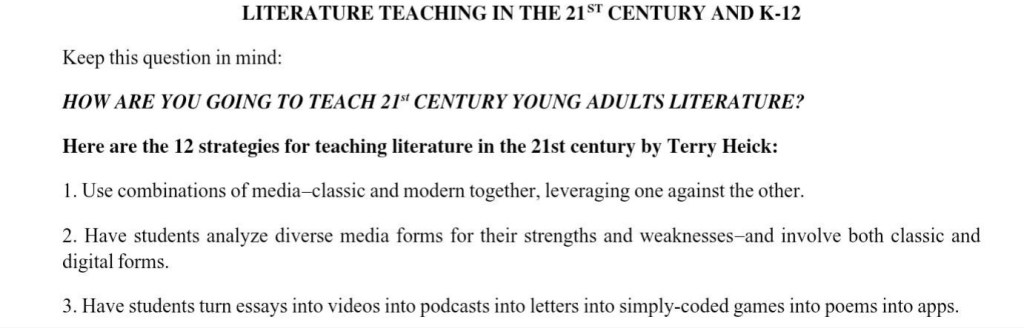
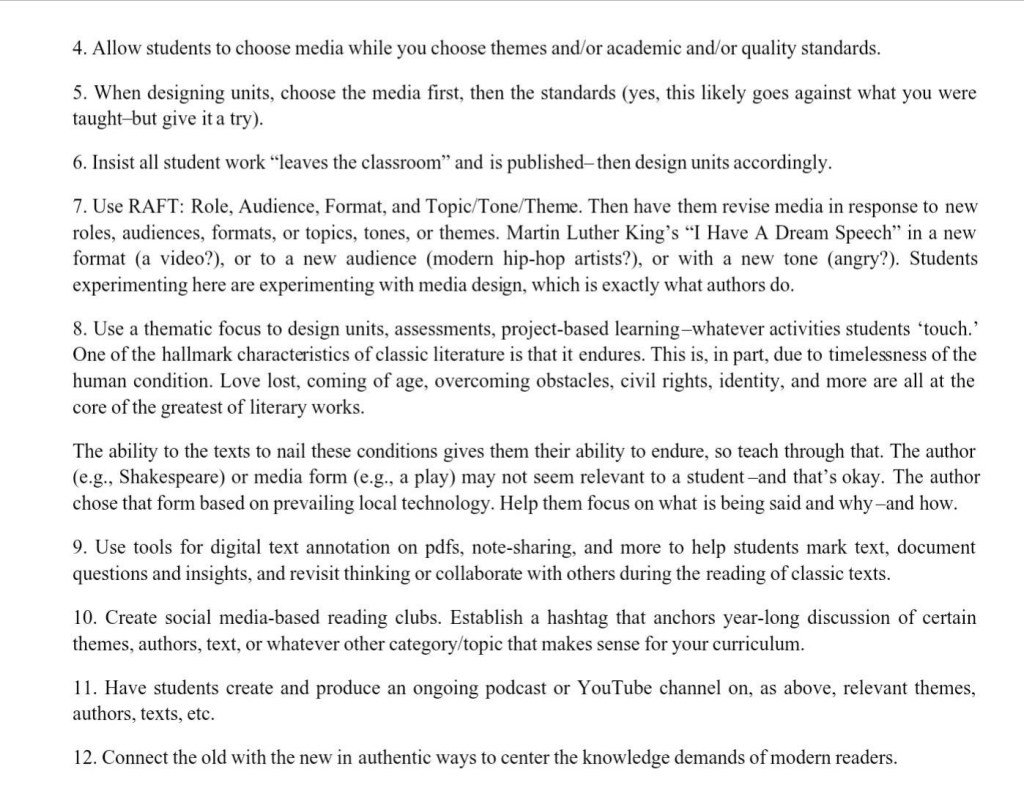
THEORIES OF LITERATURE TEACHINGS
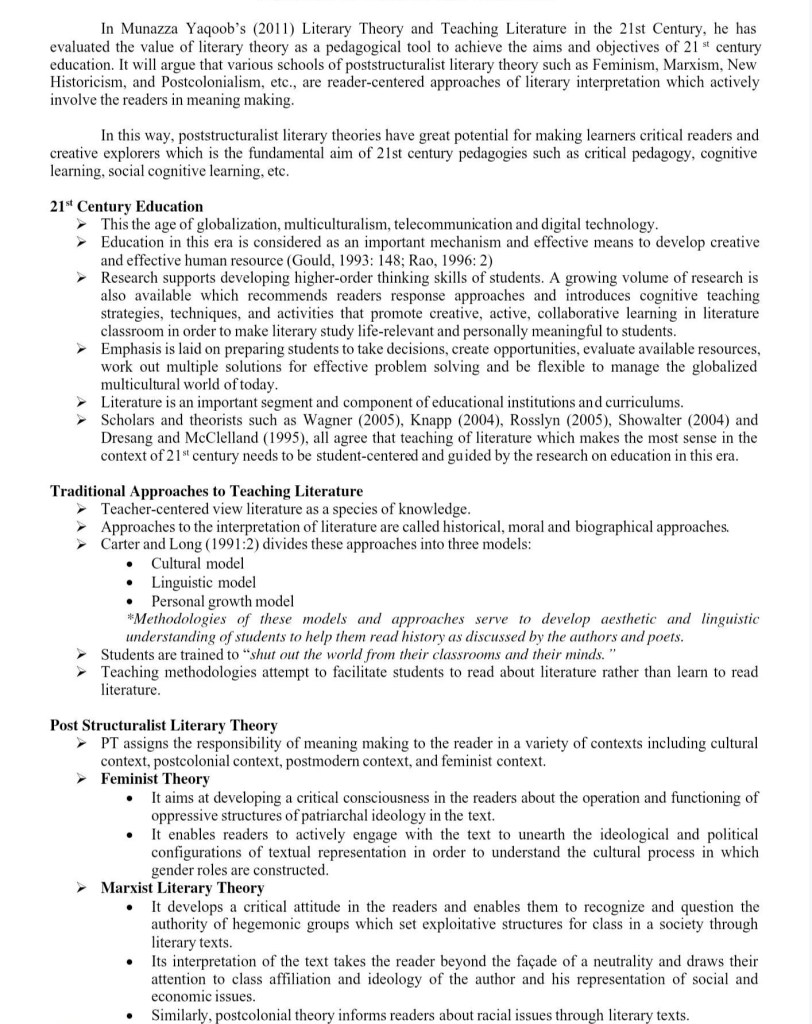
METHODS OF TEACHING LITERATURE
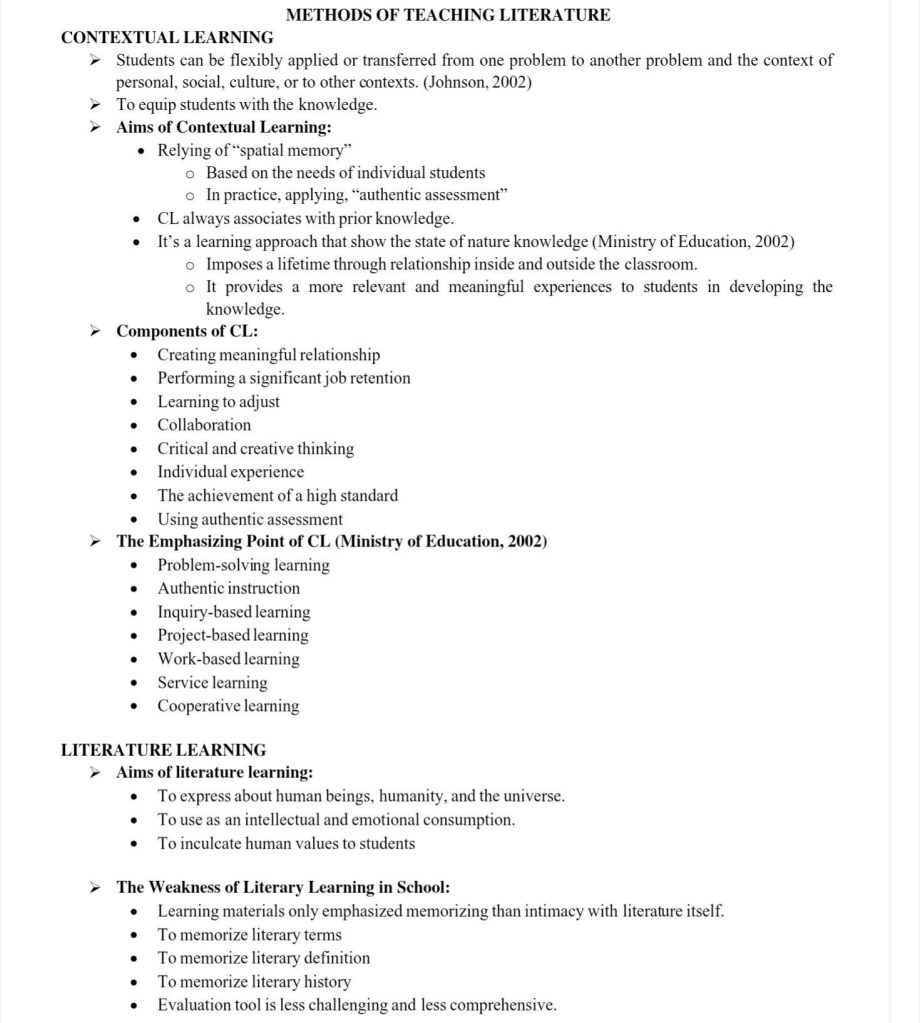
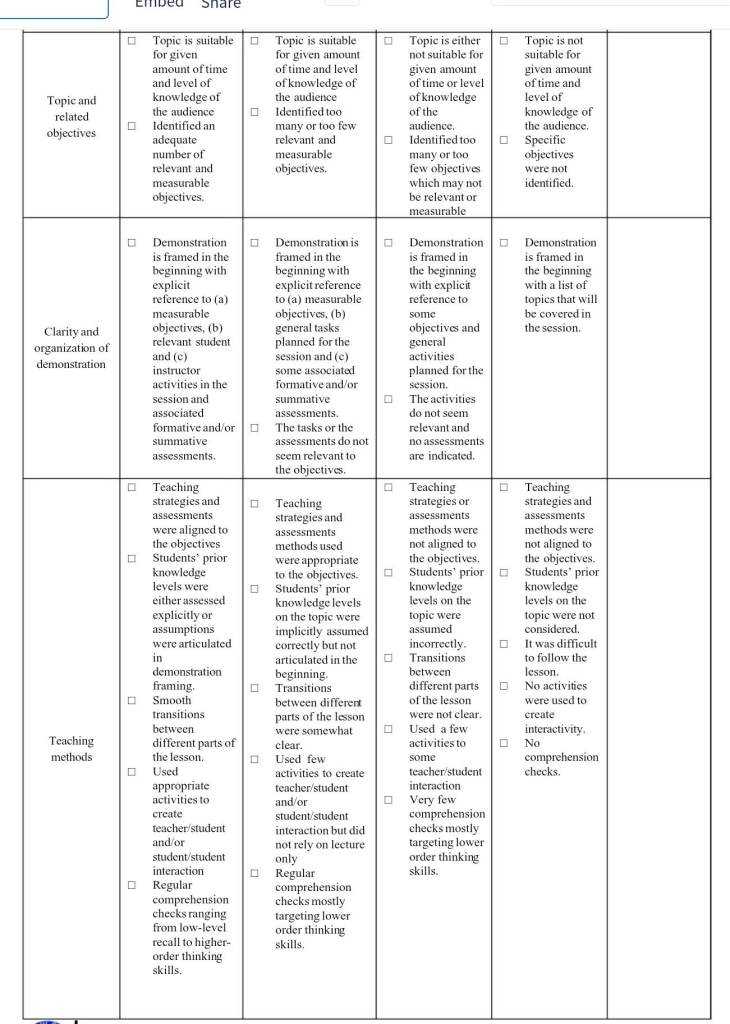
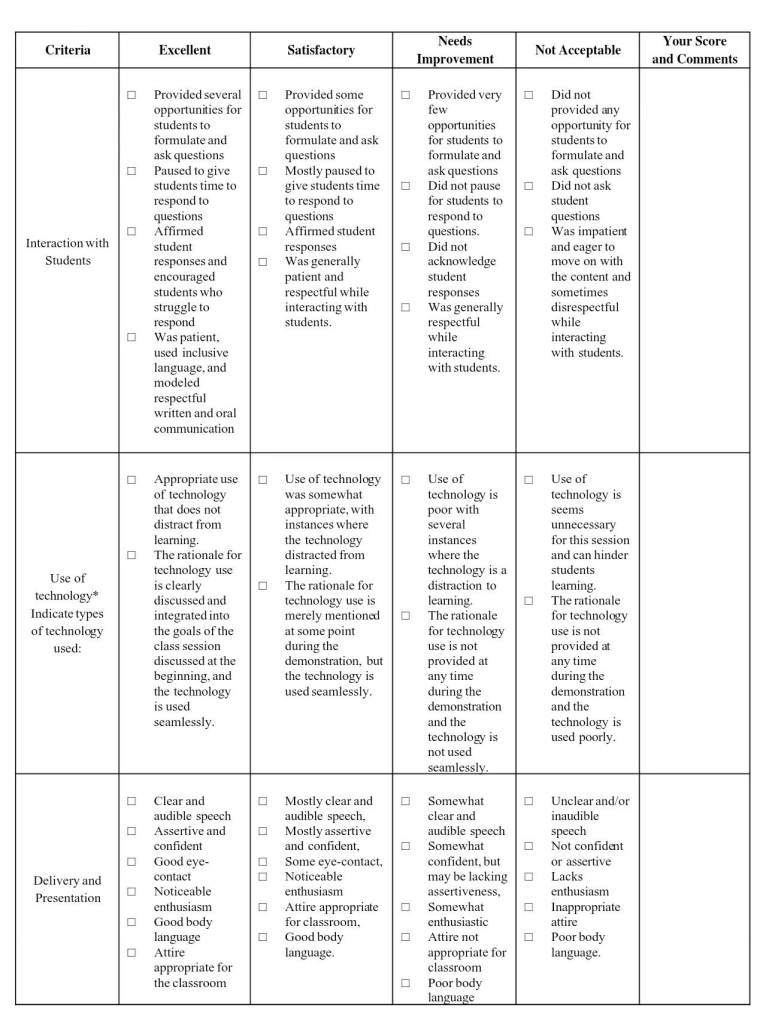
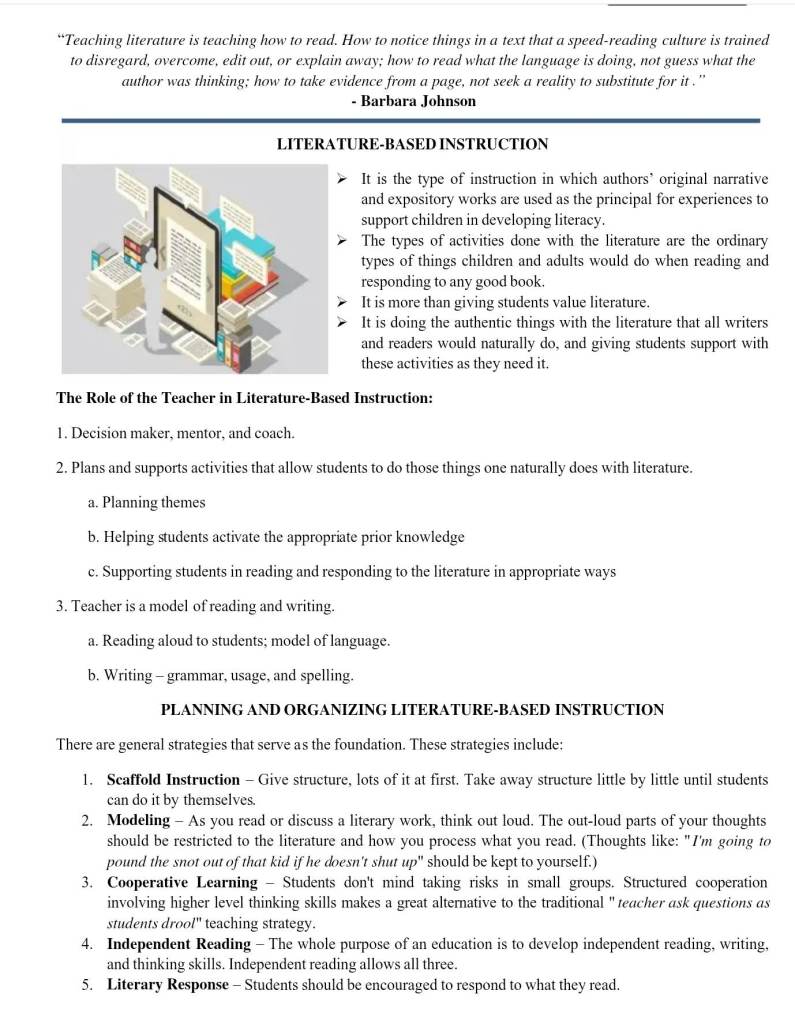
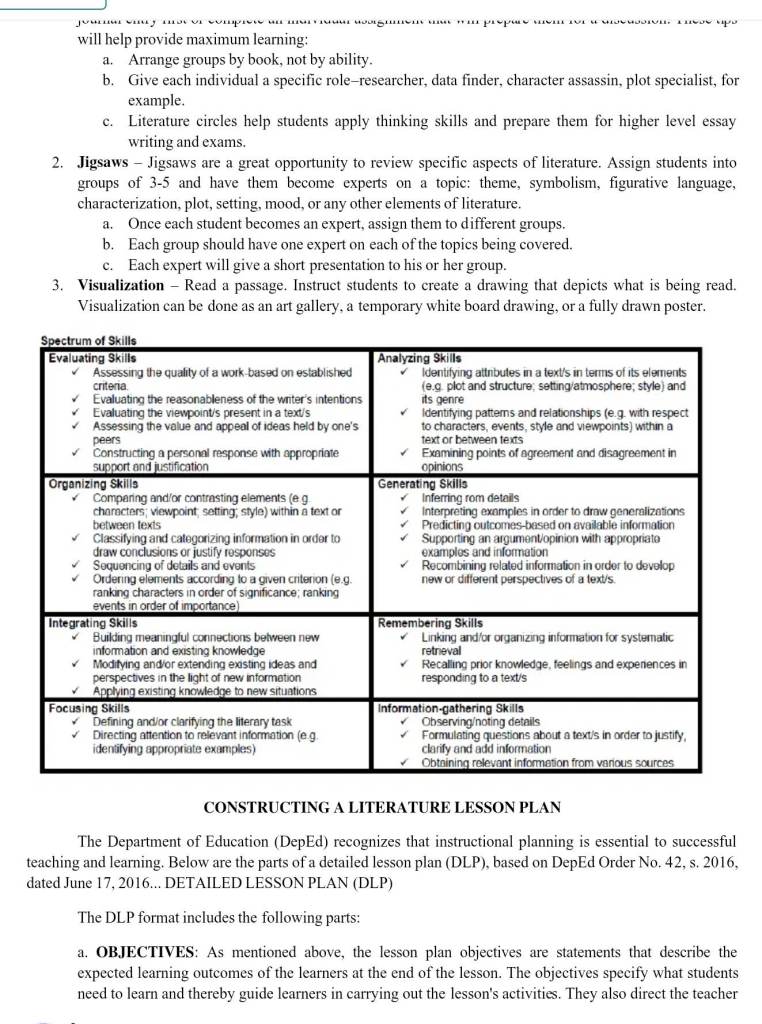
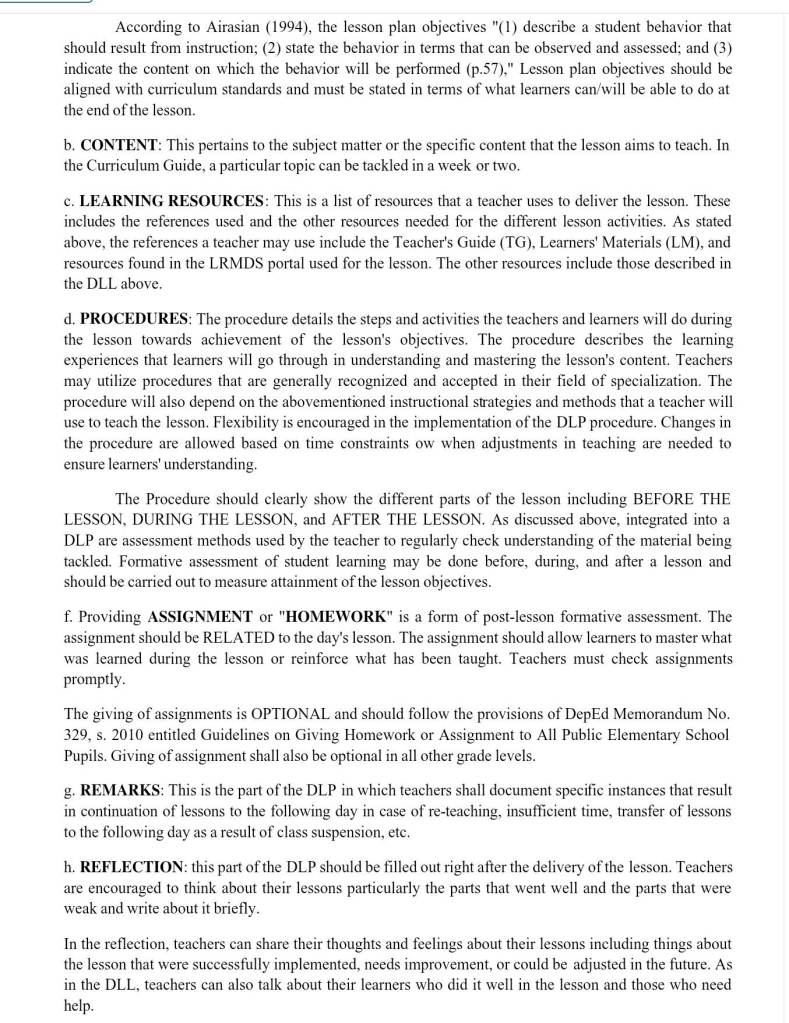
What is assessment of literature?
Assessment of literature review is a research task that finds, evaluates and discusses information on a particular topic. You need to analyse multiple texts, and discuss key ideas that you find in the reading. A literature review may also identify gaps for further research.
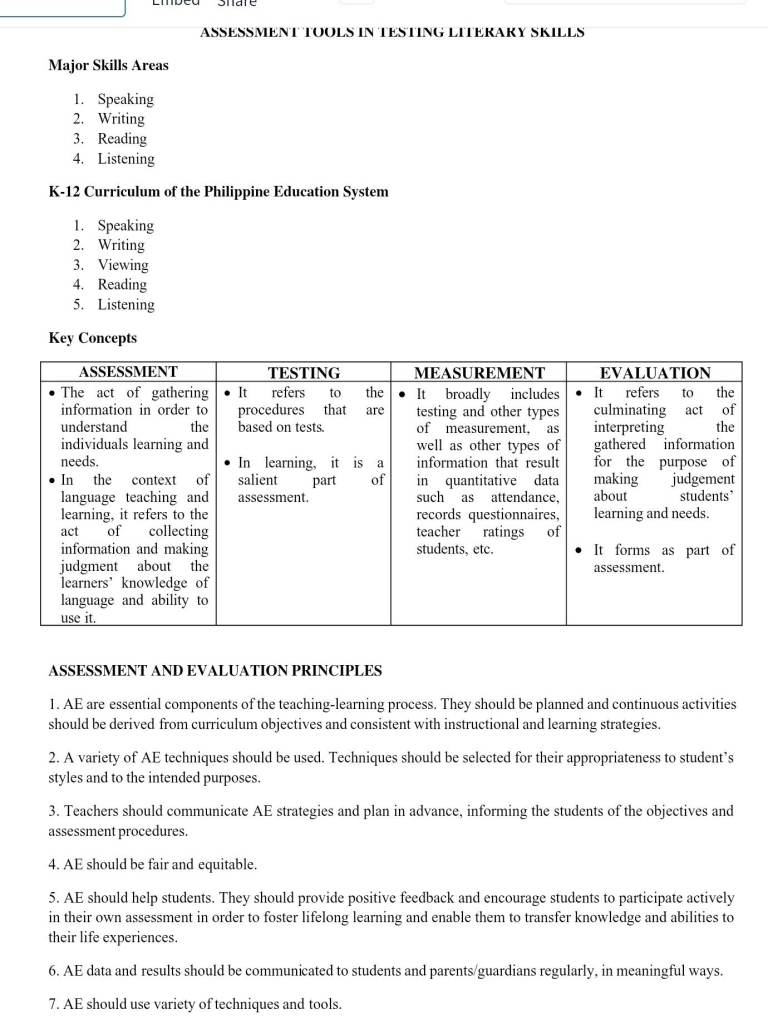
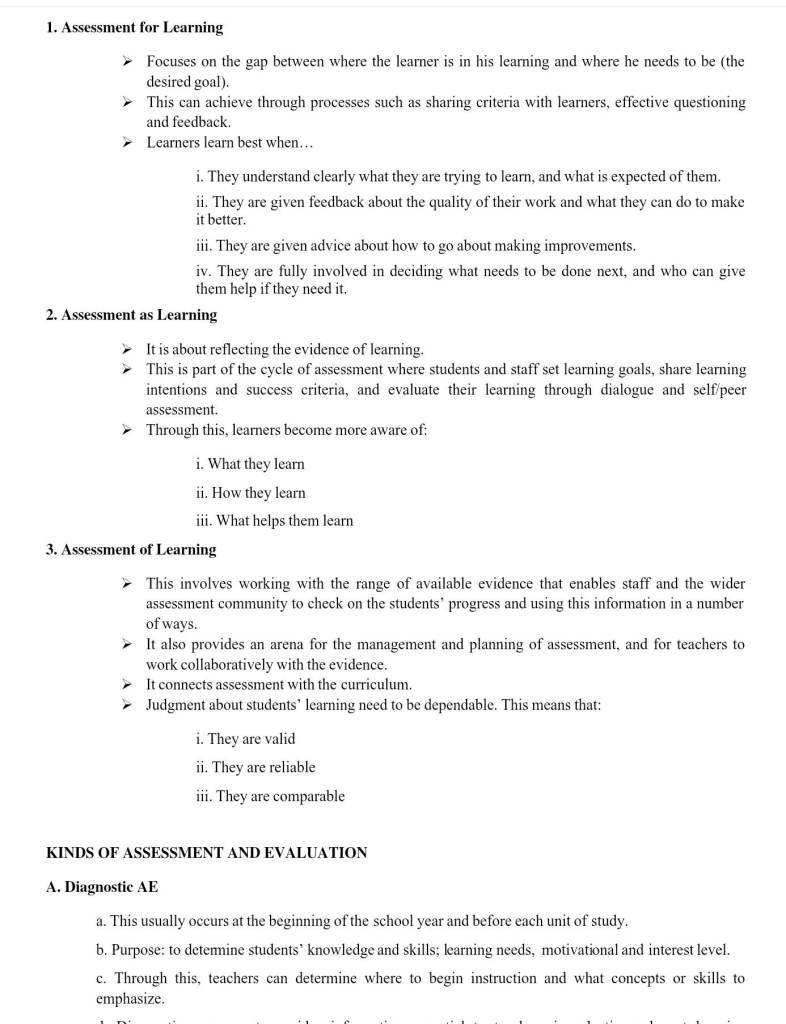
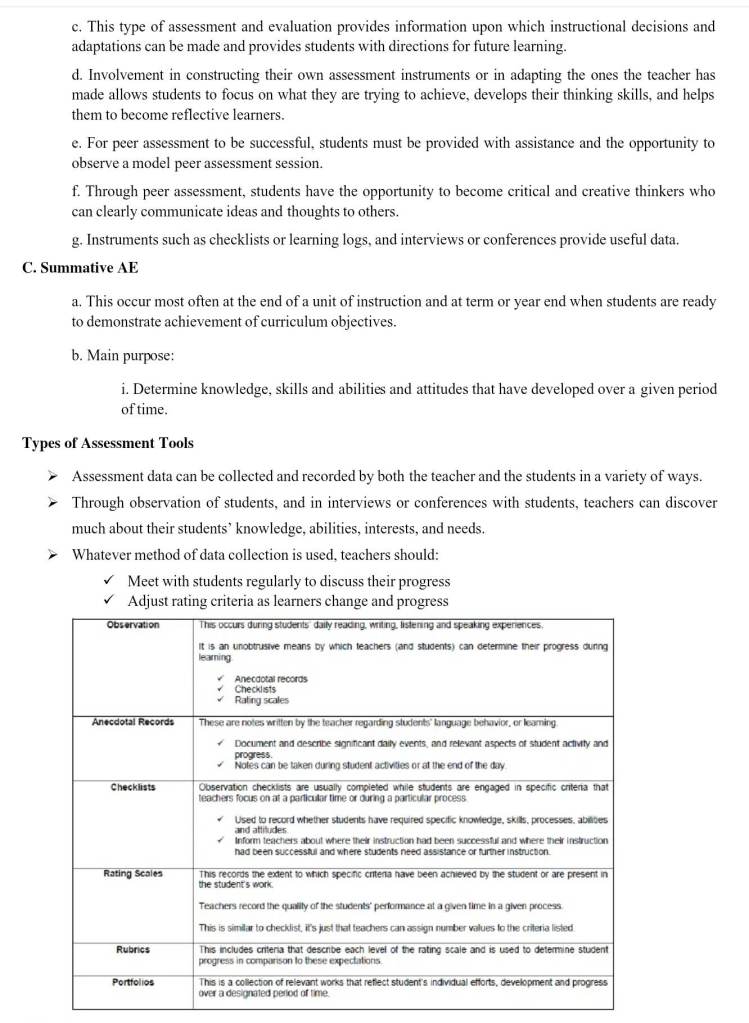
The majority of children love to have stories read to them, and some enjoy the act of reading independently; but when it comes to the classroom, how can we tell if our students are comprehending what they read? As a future educators, we have to find meaningful ways to assess our students’ reading skills to ensure they are set up for success in the years to come. Students always receive reading guide questions with their reading assignments in school, and there are good reasons for it. Teachers give reading guide questions to assess individual reading ability, keep kids accountable for the work, and teach kids what to look for while reading. As the students grow, we want to ensure we are asking age appropriate questions in connection to increasing skill level. First, we need to give them the tools.
Below is the link of three levels of reading skills that can be scaffolded and used to teach and assess reading comprehension skills.
https://study.com/academy/lesson/assessing-student-understanding-of-literature.html
PUTTING IT ALL TOGETHER
While reading guide questions and class discussions are an important part of assessing reading comprehension, students can be assessed in a number of ways depending on your objectives
LESSON SUMMARY
We need to ensure we are setting our students up for success before and during assessment. Start simple with informal reading guide questions. First, on-the-line questions ensure students understand the who, what, when and where. Next, work through inference with between-the-line questions. What is the text suggesting? Is there a bias or something deeper happening within a character? Tying it all together, work on critical thinking skills with beyond-the-line questions, teaching students how to access theme and make connections to their own lives. All three of these question types can then be transformed into formal assessments, such as essays, and projects.


Leave a comment